Drain Field Repair in Odessa, TX
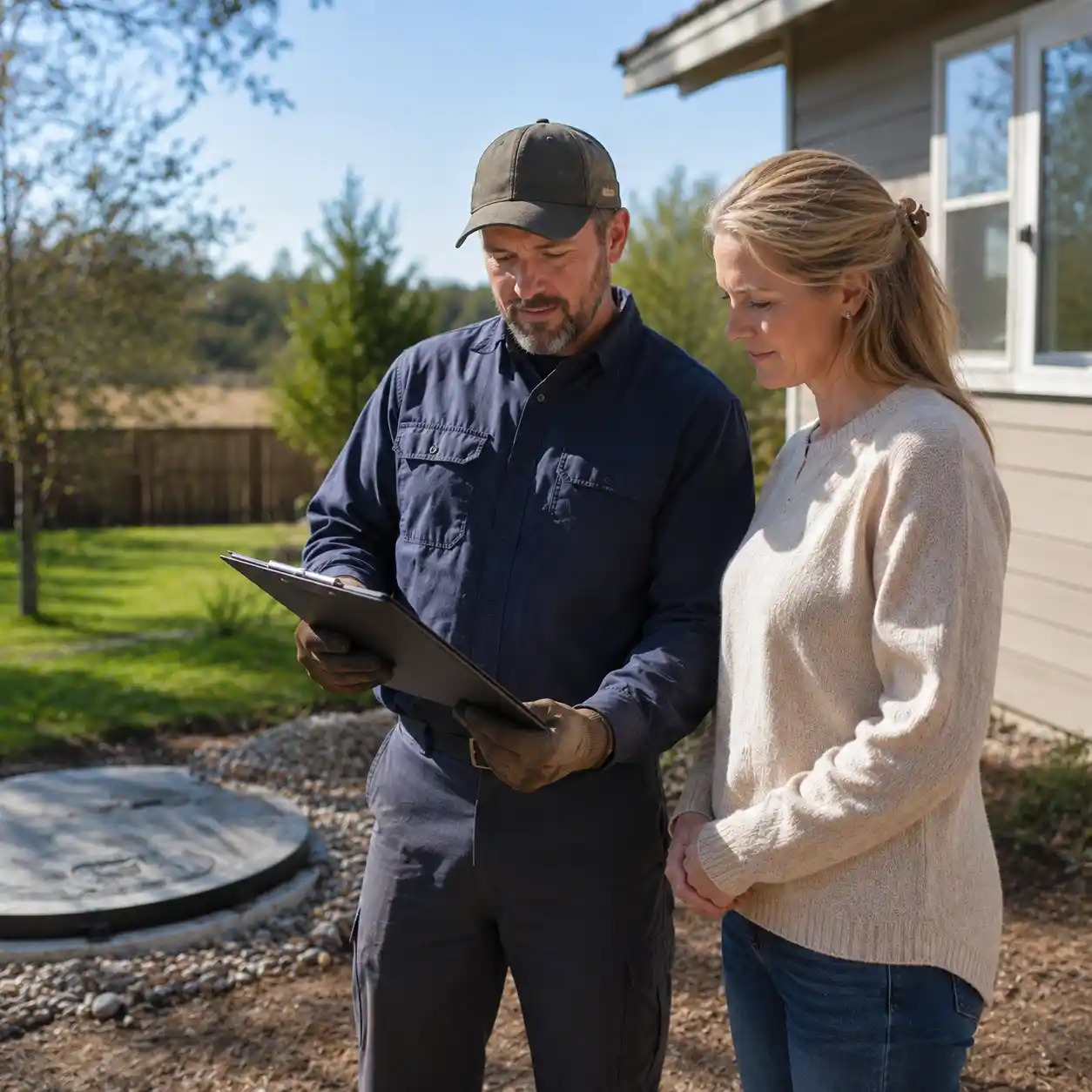
Diagnosis-first drain field service. Before we recommend replacing anything, we find out whether the actual cause is the field itself, the distribution box, or the caliche layer underneath it.
Caliche-Aware Design
Repair Before Replace
Schedule Drain Field Service
How Effluent Actually Disperses Through This Ground
A drain field works by letting treated wastewater soak slowly into the soil, where naturally occurring microbes finish breaking it down before it reaches groundwater. That process depends entirely on how well the local soil percolates.
Most Ector and Midland County lots have a thin band of sandy loam over calcified caliche. Soft caliche still lets water through reasonably well. Well-cemented caliche essentially acts like rock — water sits on top of it instead of moving through, which is what causes surfacing, slow drains, and the soggy patches homeowners notice.
Left unaddressed, a struggling field eventually backs effluent up toward the tank and into the house. Caught early, most issues are a repair, not a full replacement.
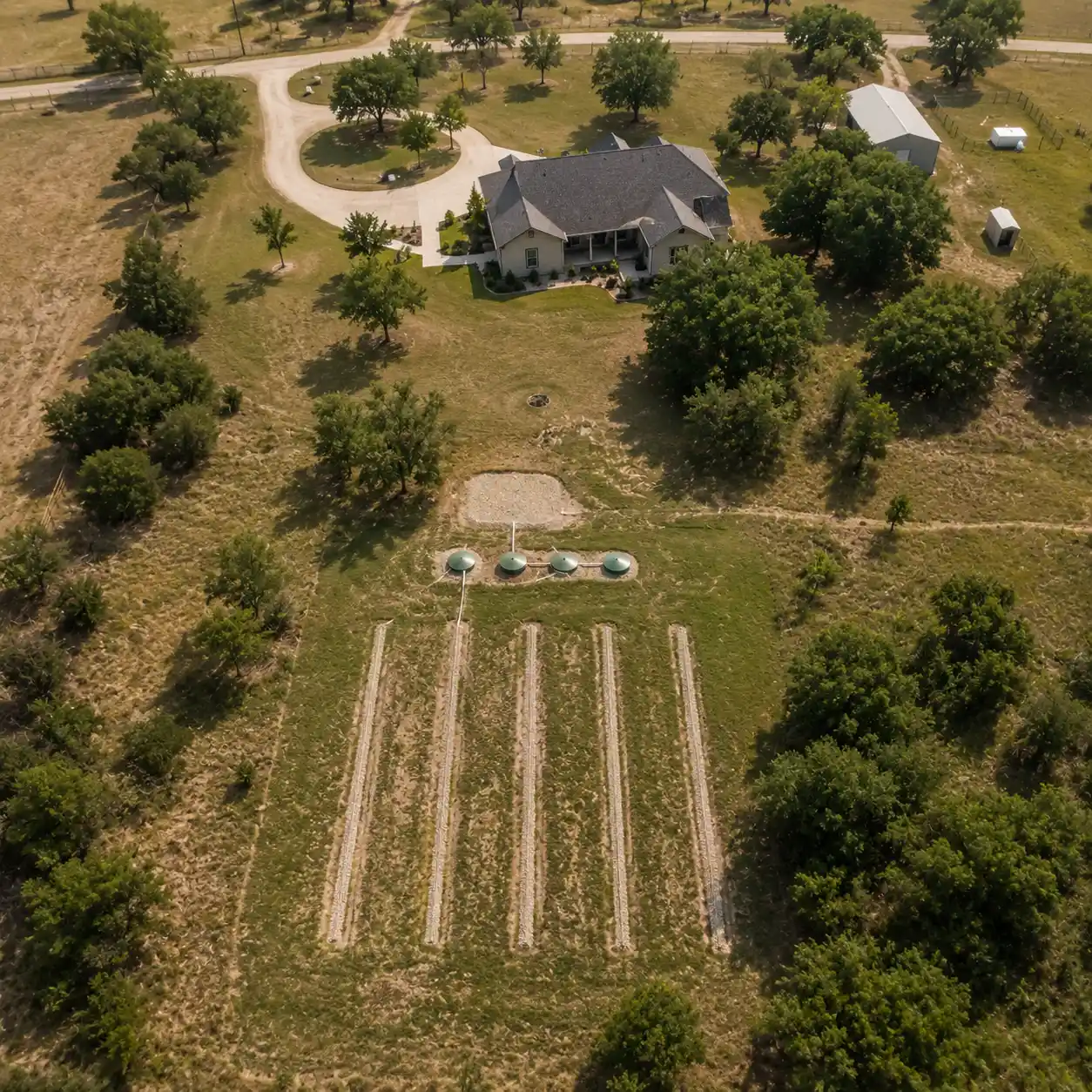
How We Diagnose & Repair a Drain Field
We test before we dig, and dig before we replace.
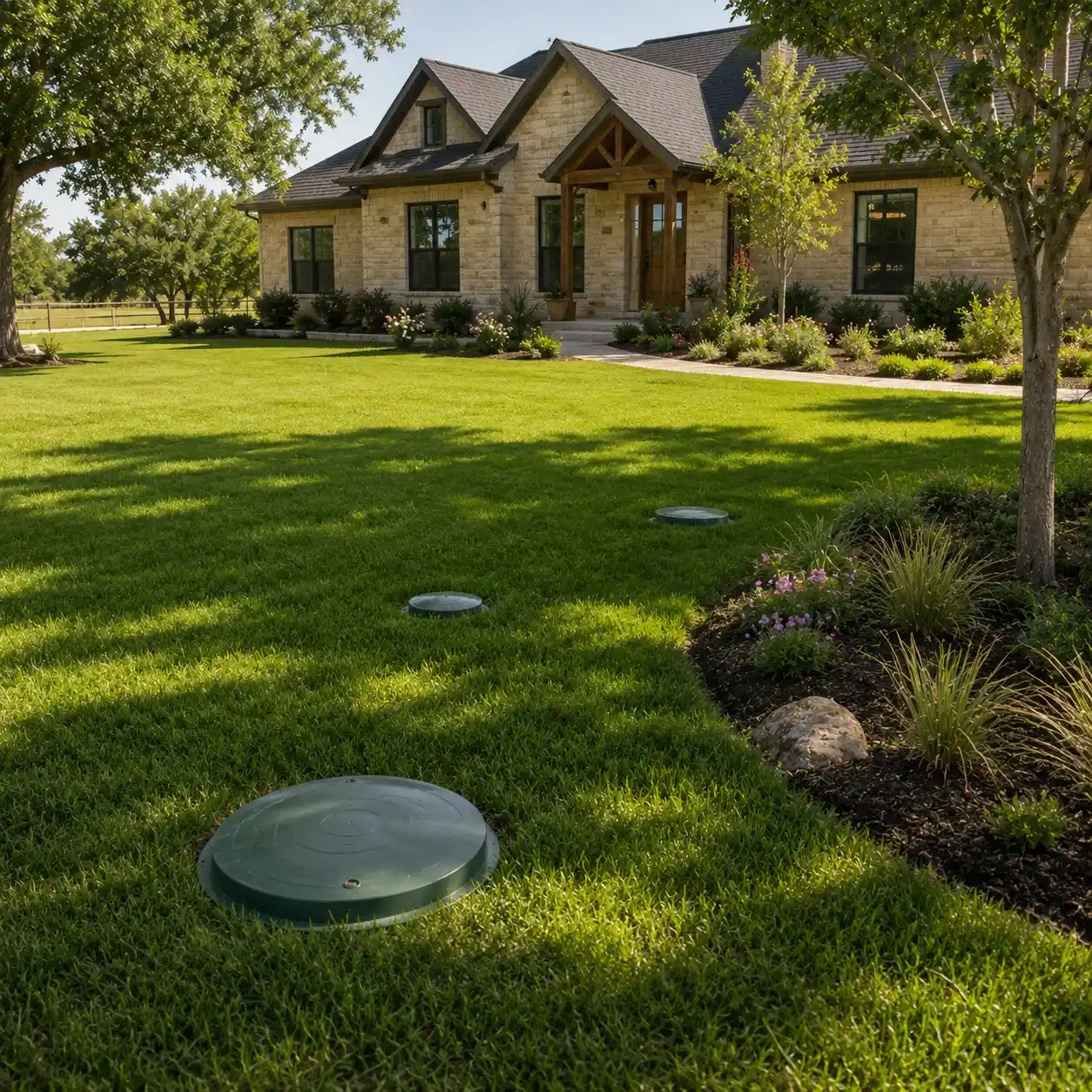
Signs Your Drain Field Needs Attention
Catching these early is what usually keeps the fix to a repair instead of a full rebuild:
- Standing water or a soggy patch over the field, even without recent rain
- An unusually green, fast-growing strip of grass over the field lines
- Sewage odor outdoors near the field area
- Slow drains throughout the house that persist after a tank pump-out
- Gurgling or backup when multiple fixtures run at once
Given how arid this climate is, standing water over a field almost never means it rained too much — it means the field isn’t absorbing what’s going into it.
From Diagnosis to Repair
Initial Diagnosis
Distribution box, tank, and field surface checked — usually 60 to 90 minutes.
Test Excavation if Needed
A test hole confirms the soil profile when the surface survey isn’t conclusive.
Repair Plan & Quote
You get a clear explanation of the cause and the recommended fix before we proceed.
Repair Completed
Timeline varies from a single day for a targeted fix to several days for a redesigned field.
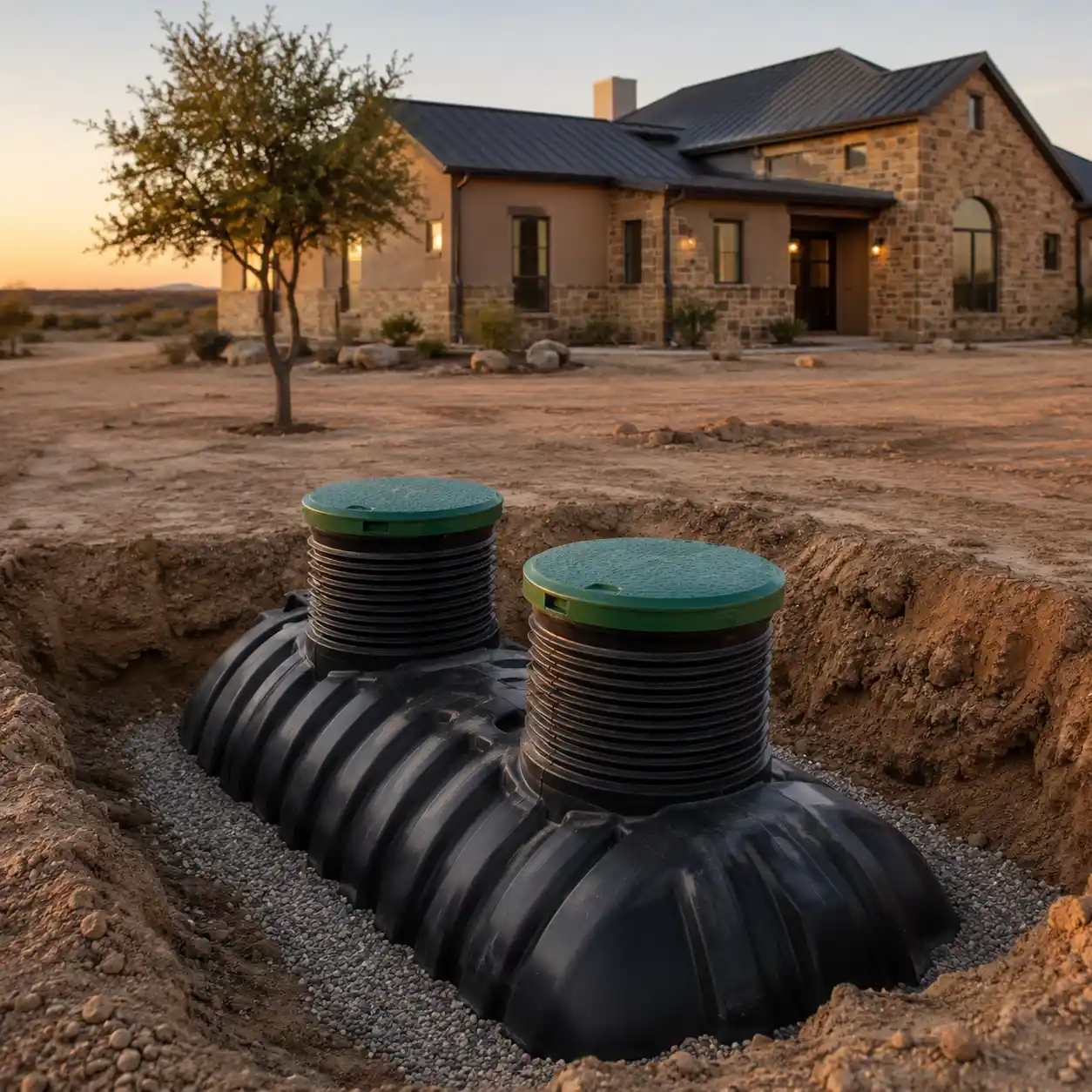
Drain Field Options When Caliche Won’t Cooperate
Which option fits depends entirely on what a site evaluation shows.
A licensed site evaluation determines which category your property falls into — we won’t recommend the more expensive option unless the soil actually requires it.
Drain Field Work for Commercial Sites
Commercial and multi-unit properties put heavier daily flow through a drain field than a typical household, which means field sizing and caliche conditions matter even more.
We size commercial field repairs and redesigns around actual usage data where it’s available, not just a generic square-footage formula.
Restaurants and food-service tenants should also confirm their grease trap isn’t contributing to field problems — FOG buildup downstream is a common contributing factor we check for.
Drain Field Questions We Hear Often
Often, yes. A clogged distribution box or a biomat issue can sometimes be resolved without touching the field lines themselves. We won’t recommend replacement until we’ve ruled those out.
That’s a classic sign the field is receiving more effluent than the soil beneath it can absorb, usually because of a cemented caliche layer close to the surface at that specific spot.
A targeted repair might be a single day. A full redesign, especially one requiring a soil substitution field or aerobic system, typically runs several days including permitting time.
Repairs to an existing field generally require a permit from your county health department, though true emergency repairs can proceed first and be reported afterward. We’ll handle the paperwork either way.
A system properly sized and designed for your specific soil conditions from the start goes a long way. This is exactly why a real site evaluation before installation matters — see our Septic System Installation page.
Drain Field Service Across Seven Permian Basin Counties
Soil conditions vary lot to lot, and county to county, so we evaluate each site individually rather than assuming what worked next door — or in the next county over — applies here.
We cover drain field diagnosis and repair throughout our full seven-county footprint, from Ector County caliche to Upton County’s Edwards Plateau ground.
- Odessa, West Odessa, Gardendale, Penwell, Notrees, Goldsmith — Ector County
- Midland — Midland County
- Andrews — Andrews County
- Stanton, Lenorah, Tarzan — Martin County
- Big Spring, Forsan, Knott — Howard County
- Garden City — Glasscock County
- McCamey, Midkiff — Upton County
Other Septic Services We Offer
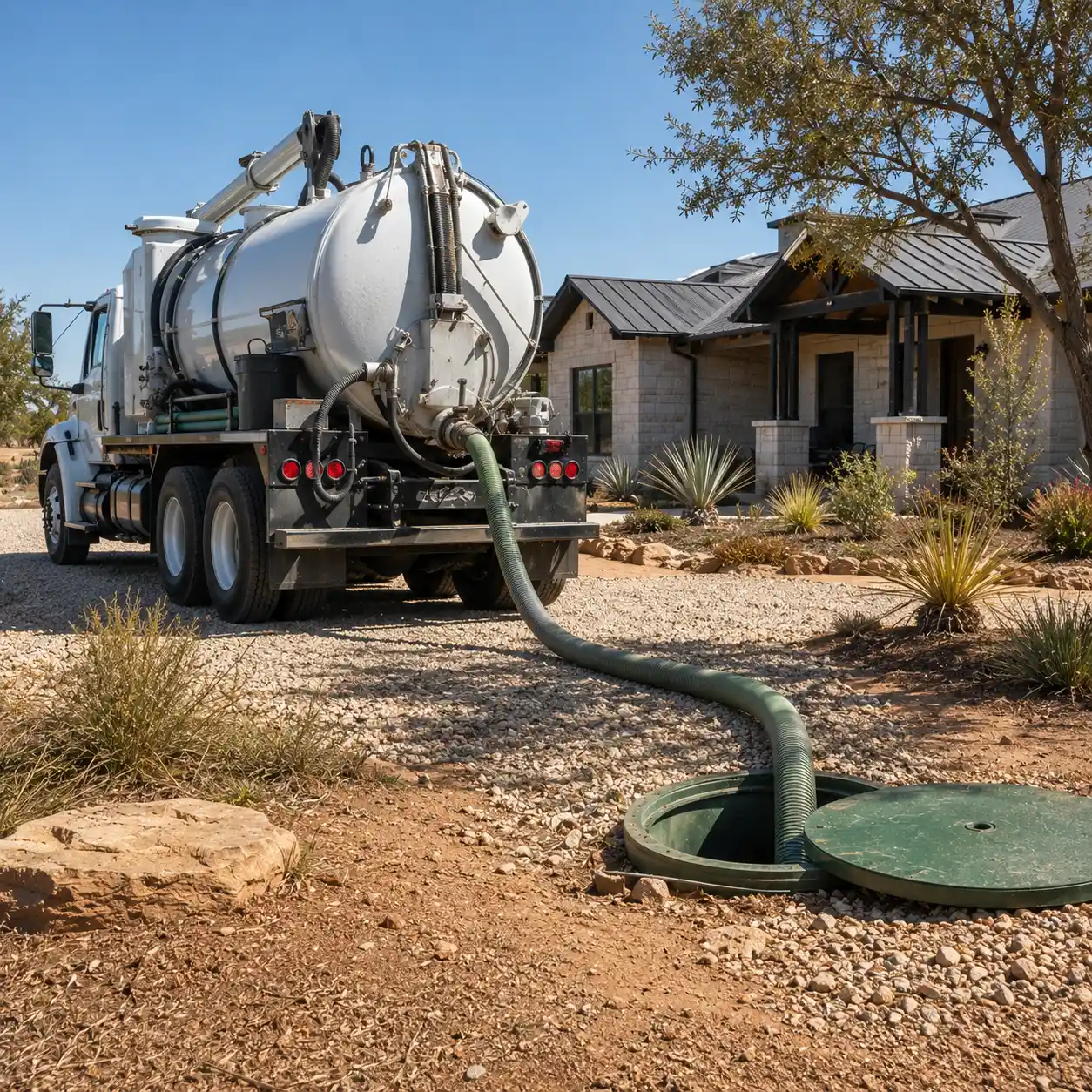
Septic Tank Pumping
An overloaded tank can accelerate drain field wear — keep pumping current.
Get Your Drain Field Diagnosed
Describe what you’re noticing — standing water, odor, slow drains — and we’ll get a crew out to find the actual cause.
- Distribution box & field diagnosis
- Test excavation when needed
- Targeted line & box repair
- Soil substitution field installation
- Aerobic treatment unit & spray field design
- Serving seven counties across the Permian Basin
Tell Us About Your Needs
We’ll reach out to confirm your appointment details.